

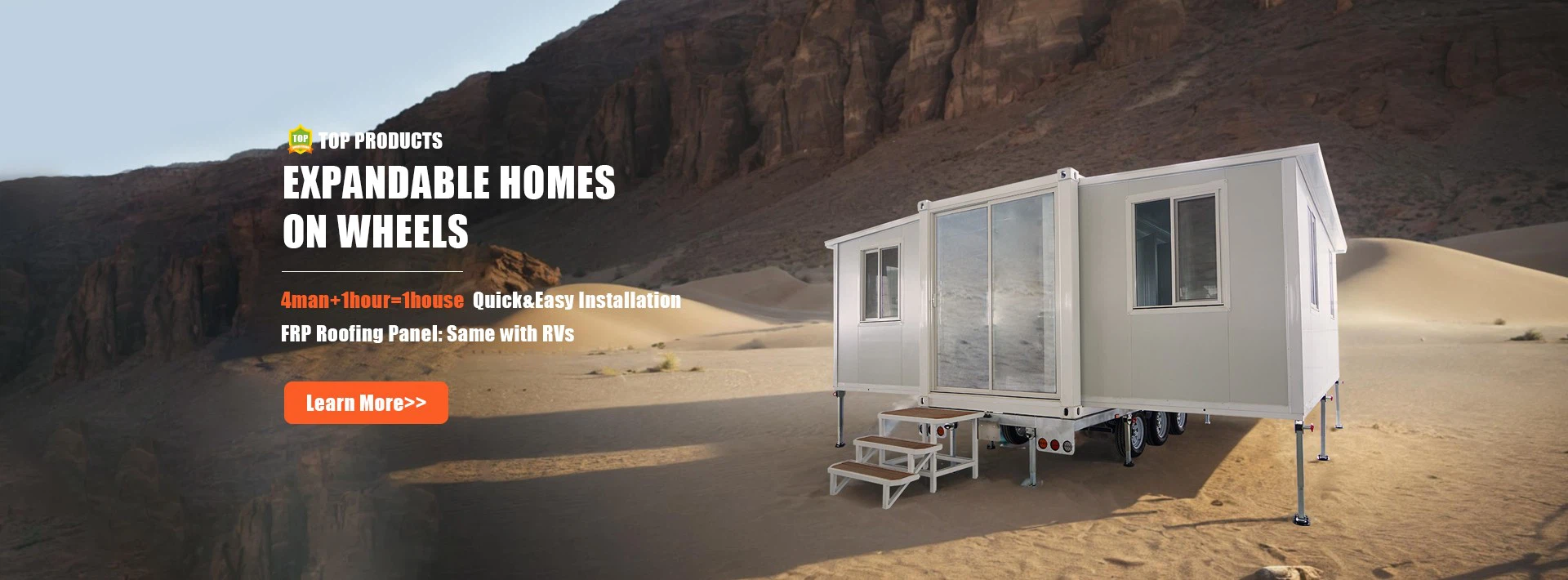


Expandable Tiny House On Wheels
*Building area:36m2
*House internal plan: bedroom, living room, kitchen, bathroom, etc.
*Installation: 90% preinstalled in factory; 6 people within one day can finish *Loading: 1 unit/40'HQ or 1 unit/40'0T
*Customized available
Hebei Tianyu Guangbo Module Housing Co., Ltd. is one of the leading manufacturers and suppliers of expandable tiny house on wheels in China, also supports custom service. Welcome to buy waterproof expandable tiny house on wheels for sale here from our factory. Quality products and reasonable price are available.
15+ Years of Manufacturing Experience
At TYGB, we have specialized in the design and manufacturing of prefabricated housing systems for more than 15 years. Our production facility covers over 46,000 square meters and is equipped with advanced welding, cutting, and assembly equipment to ensure consistent quality and large-scale production capacity.
Today, TYGB produces more than 3,000 prefabricated housing units annually and exports to over 50 countries worldwide, including the United States, Canada, Australia, New Zealand, and Europe.
Our expandable tiny houses on wheels are engineered to provide a practical combination of mobility, durability, comfort, and affordability. Built with galvanized steel structures and premium insulation materials, these homes are designed to withstand a wide range of climates while maintaining excellent living comfort.
TYGB Factory Advantages
✓ 16+ Years Manufacturing Experience
✓ 52,000㎡ Production Facility
✓ 5,000+ Units Annual Production Capacity
✓ Exported to 50+ Countries
✓ 30–40 Years Structural Service Life
✓ OEM & ODM Customization Support
✓ Factory Direct Pricing
✓ Complete Export Documentation
✓ Professional Engineering Team
Why Choose an Expandable Tiny House on Wheels?
As housing costs continue to rise across North America, more homeowners, investors, and developers are looking for flexible and affordable housing alternatives. An expandable tiny house on wheels combines the mobility of a trailer home with the comfort and functionality of a traditional residence.
Unlike standard tiny homes that often have limited interior space, expandable models can be transported in a compact form and expanded on-site to create a significantly larger living area.

Key Benefits
More Living Space
The expandable design allows the house to unfold after delivery, increasing usable interior space without increasing transportation costs.
Lower Construction Costs
Compared with traditional site-built homes, expandable tiny houses can reduce construction expenses by 30%–50% while shortening project timelines.
Mobility and Flexibility
The trailer-based design makes relocation easier than conventional housing. Owners can move the house when needed without rebuilding.
Fast Installation
Most expandable tiny houses can be installed and ready for occupancy within a single day after site preparation.
Sustainable Living
Energy-efficient insulation, LED lighting, and optional solar systems help reduce utility consumption and environmental impact.
Modern Lifestyle
Large windows, open-plan layouts, integrated kitchens, and full bathrooms provide the comfort expected from a modern home while maintaining a compact footprint.
Expandable Tiny House vs Traditional Tiny House
Many buyers wonder whether an expandable tiny house offers better value than a conventional tiny home. The answer depends on space requirements and intended use.
| Feature | Expandable Tiny House | Traditional Tiny House |
|---|---|---|
| Interior Space | Larger after expansion | Fixed size |
| Transportation Cost | Lower | Similar |
| Installation Time | 4-8 Hours | 1-3 Days |
| Layout Flexibility | High | Limited |
| Rental Potential | Excellent | Good |
| ADU Application | Highly Suitable | Suitable |
| Resale Value | Higher | Moderate |
| Customization | Extensive | Limited |
For homeowners seeking maximum usable space without sacrificing mobility, expandable tiny houses offer a significant advantage over conventional tiny homes.
Dimensions of an Expandable Tiny House on Wheels


Layout
Send an inquiry to get free designs!


For more choices, please send your requirements to us.
Products Details
|
Main Frame |
Galvanized Steel |
|
Column wrap angle |
Color steel molded parts |
|
Frame |
Galvanized steel tube |
|
Wallboard |
Rock wool sandwich panel |
|
Windows |
Made of PVC/aluminum fame, Broken bridge aluminum.Dimension W1125mm*H1100mm, glazed with double glass in a thickness of 5/8/5mm. |
|
Dimension W800*H1100mm, glazed with double glass in a thickness of 5/8/5mm. |
|
|
Door |
Made of steel/aluminum frame, Broken bridge aluminum. Dimension W1930mm*2100mm glazed with double glass in a thickness of 5/8/5mm. |
|
Can be customized according to demand. |
|
|
Wall |
50/75/100mm EPS/Rock wool/PU sandwich panel |
|
Roof |
3-4mm Hot galvanized steel structure with 4 corner casts and 50 mm-70 mm EPS or PU sandwich panel; Galvanized steel roof covering. |
|
Floor |
Standard flooring:18mm sanding board+2mm vinyl flooring/4mm SPC click flooring |
|
Electricity |
3C/CE/CL/SAA Standard, with distribution box, lights, switch, sockets, etc. |
|
Optional Accessory |
A/C,office,dormitory,Toilet,kitchen,bathroom,shower,steel roof,electrical appliance for accommodation, cladding panels, decorative material, furniture, sanitary, kitchen, etc. |


100% Strong Steel Structure
Our factory & equipment
46000 sqm workshop, production 3000 sets annually


Who Is This Tiny House Designed For?
TYGB Expandable Tiny House on Wheels is designed for homeowners, investors, contractors, and developers looking for a flexible, affordable, and highly functional housing solution. Thanks to its expandable structure and trailer-based mobility, this model serves a wide range of residential and commercial applications.
Airbnb & Vacation Rental Investors
Short-term rental demand continues to grow across North America. Many investors are choosing expandable tiny homes as an affordable alternative to traditional cabins and vacation properties.
The modern design, open living space, private bathroom, and fully functional kitchen provide guests with a comfortable stay while generating attractive rental income.
Backyard ADU Owners
Homeowners often need additional living space for family members, elderly parents, adult children, or visiting guests. An expandable tiny house can be used as an Accessory Dwelling Unit (ADU), guest house, or granny flat without the expense of a traditional home extension.
Farm & Rural Property Owners
Farm owners frequently require housing for workers, seasonal staff, or family members. The mobility and durability of the expandable tiny house make it an ideal solution for agricultural land and rural properties.
Retirement Living
Many retirees are downsizing to reduce maintenance expenses and simplify their lifestyle. Expandable tiny homes provide comfortable living space while maintaining lower ownership costs compared to conventional homes.
Remote Workers & Digital Nomads
With remote work becoming increasingly common, more professionals are looking for flexible housing options. An expandable tiny home offers a dedicated workspace, comfortable living environment, and the ability to relocate when necessary.
Construction Companies & Project Sites
Builders and contractors use expandable trailer homes for project accommodation, temporary offices, and workforce housing due to their rapid deployment and low operational costs.
Whether used as a permanent residence, rental property, guest house, or temporary accommodation, the TYGB Expandable Tiny House on Wheels delivers flexibility without sacrificing comfort.
Transportation & Installation Guide
One of the biggest advantages of an expandable tiny house on wheels is the ability to transport and install it quickly compared to traditional housing.
Transportation Efficiency
The house is transported in a compact folded state, reducing freight costs and improving logistics efficiency. Multiple units can often be loaded within a standard shipping arrangement, helping distributors and developers lower transportation expenses.
All the houses will packed in 40' high cube container, one 40HQ can load 1 set of expandable trailer house.

Site Preparation
Before delivery, customers should prepare a level site with suitable access for transportation equipment. Common foundation options include:
Concrete slab foundation
Concrete piers
Gravel pad foundation
Steel support frame
Adjustable footing systems
The best foundation option depends on local regulations, soil conditions, and intended use.
Installation Process
Step 1: Position the unit on the prepared foundation.
Step 2: Stabilize the trailer structure and level the building.
Step 3: Expand both side sections.
Step 4: Secure structural connections.
Step 5: Connect electrical, water, and drainage systems.
Step 6: Complete interior inspection and commissioning.
Most installations can be completed within 4–8 hours under normal site conditions.

Utility Connections
The expandable tiny house can be connected to:
Municipal water supply
Septic systems
Municipal sewer systems
Grid electricity
Solar power systems
Backup battery systems
This flexibility makes the home suitable for both urban and off-grid applications.
Installation Support
TYGB provides installation guidance, engineering drawings, and technical assistance to ensure a smooth installation process for customers worldwide.
How Much Does an Expandable Tiny House On Wheels Cost?
One of the most frequently asked questions from homeowners, investors, and distributors is: "How much does an expandable tiny house on wheels cost?"
The final price depends on several factors, including house size, interior configuration, customization requirements, transportation distance, and local installation conditions. Compared with traditional housing, expandable tiny houses offer a more affordable and flexible solution while significantly reducing construction time and labor costs.
1. Standard Configuration Price
A standard expandable tiny house on wheels typically includes:
Fully galvanized steel structure
Insulated wall and roof panels
Aluminum frame double glazed sliding windows
Entrance door*1
Electrical system
Lighting and sockets
Vinyl or SPC flooring
Basic bathroom facilities
Basic kitchen layout
Standard configurations are designed to provide a ready-to-use living space suitable for residential, rental, or temporary accommodation purposes.
The standard model is often the most economical choice for:
Backyard guest houses
Airbnb rentals
Farm housing
Vacation cabins
Workforce accommodation
Because factory production minimizes labor costs and material waste, buyers can achieve substantial savings compared with traditional site-built construction.
Customized Configuration Price
Many customers choose to customize their expandable tiny house to better suit their local market or personal requirements.
Popular customization options include:
Layout Modifications
1 Bedroom Layout
2 Bedroom Layout
3 Bedroom Layout
Open Studio Design
Office Layout
Multi-Purpose Commercial Layout
Insulation Upgrades
For extreme climates, customers can upgrade to:
75mm Rock Wool Panels
100mm Rock Wool Panels
Polyurethane Insulation Panels
These upgrades improve thermal performance and energy efficiency.
Interior Upgrades
Optional interior features include:
Full kitchen packages
Premium bathroom fixtures
Built-in wardrobes
Decorative wall finishes
Luxury flooring systems
Smart home systems
Furniture packages
Exterior Upgrades
Customers may also select:
Decorative cladding
Wood-grain finishes
Steel exterior panels
Enhanced roofing systems
Larger windows
Sliding glass doors
Customized projects generally cost more than standard models due to additional materials, labor, and engineering requirements.
Factors Affecting Shipping Costs
Transportation is an important part of the overall project budget.
Several factors influence shipping costs:
Destination Country
Shipping costs vary significantly depending on the final destination.
Popular export markets include:
United States
Canada
Australia
New Zealand
Europe
Southeast Asia
Longer transportation distances generally result in higher freight expenses.
Project Location
The delivery location also impacts costs.
Factors include:
Distance from seaport
Road accessibility
Mountainous terrain
Remote rural locations
Urban delivery restrictions
Projects located in remote areas may require additional transportation arrangements.
Quantity Ordered
Bulk orders often reduce transportation costs per unit.
Distributors and developers purchasing multiple units can typically achieve more competitive freight rates compared with single-unit shipments.
Local Regulations
Permit requirements, escort vehicles, oversized transportation permits, and special unloading equipment can also affect final logistics costs.
TYGB works with experienced logistics partners to help customers optimize transportation solutions and reduce delivery expenses whenever possible.
Installation Costs
One of the biggest advantages of an expandable tiny house on wheels is the low installation cost compared with traditional construction.
Since approximately 90% of the building is completed in the factory, on-site work is significantly reduced.
Typical Installation Expenses
Installation costs may include:
Site preparation
Foundation construction
Crane services (if required)
Utility connections
Water system connection
Electrical connection
Sewer connection
The actual installation budget depends on local labor rates and site conditions.
Lower Labor Requirements
Unlike traditional housing projects that may require several months of construction work, expandable tiny houses can typically be deployed within 4–8 hours after delivery.
This provides significant savings through:
Reduced labor costs
Shorter project schedules
Faster occupancy
Lower contractor expenses
Long-Term Cost Advantages
In addition to lower initial investment costs, expandable tiny houses offer long-term economic benefits:
Lower maintenance costs
Reduced utility consumption
Energy-efficient insulation
Faster return on investment
Rental income opportunities
Relocation flexibility
For homeowners, developers, Airbnb investors, and distributors, expandable tiny houses on wheels provide an attractive balance between affordability, functionality, and long-term value.
Request A Customized Quote
Every project is unique. To receive an accurate quotation, please provide:
Destination country
Preferred house size
Number of bedrooms
Intended application
Customization requirements
Our sales and engineering team will recommend the most suitable configuration and provide a detailed factory-direct quotation tailored to your project.
How Long Does It Last?
Designed For Long-Term Use
The TYGB Expandable Tiny House on Wheels is built using a hot-dip galvanized steel frame combined with high-density insulated wall panels and weather-resistant roofing materials.
Under normal usage and proper maintenance conditions, the structural lifespan can reach 30 to 40 years.
Key durability features include:
Galvanized steel structural framework
Corrosion-resistant surface treatment
Fire-resistant insulation materials
Waterproof roofing system
Reinforced floor structure
Double-glazed doors and windows
These components are specifically selected to withstand changing weather conditions while maintaining structural integrity.
Corrosion Protection
Corrosion is one of the primary factors affecting the lifespan of portable housing.
To address this challenge, TYGB uses galvanized steel components that provide excellent protection against:
Rain exposure
Humidity
Salt air environments
Seasonal temperature changes
For coastal projects, optional marine-grade anti-corrosion coatings are available, including:
Epoxy zinc-rich primer
Polyurethane intermediate coating
Fluorocarbon topcoat system
These protective systems significantly extend service life in high-humidity and coastal environments.
Wind & Snow Resistance
Depending on project requirements, the structure can be upgraded to meet local wind and snow load standards.
Suitable for:
High-wind coastal areas
Heavy snowfall regions
Mountain environments
Hurricane-prone locations
Engineering upgrades are available for specific project requirements.
Roof Durability
The roof system utilizes galvanized steel structural components combined with insulated sandwich panels.
Benefits include:
Excellent waterproof performance
Improved thermal insulation
Reduced heat transfer
Long-term structural stability
Regular inspection and cleaning help maximize roof lifespan.
Wall System Performance
Customers can choose from:
EPS Sandwich Panels
Rock Wool Sandwich Panels
PU Sandwich Panels
Rock wool and polyurethane systems offer superior thermal insulation and fire resistance, making them ideal for permanent residential use.
Simple Maintenance Requirements
Routine maintenance is straightforward and includes:
Inspecting sealants annually
Cleaning roof drainage systems
Checking electrical connections
Inspecting exterior coatings
Lubricating moving expansion components
With basic maintenance, the structure can provide reliable performance for decades.
Why Longevity Matters?
A longer service life means:
Lower ownership costs
Better return on investment
Higher rental profitability
Reduced replacement expenses
Increased resale value
For homeowners, developers, and investors, long-term durability is one of the key reasons expandable tiny houses continue gaining popularity worldwide.
Can It Be Used as an ADU?
Many customers purchase expandable tiny houses specifically for use as Accessory Dwelling Units (ADUs).
As housing shortages continue across North America, ADUs have become one of the fastest-growing residential housing solutions. An expandable tiny house on wheels offers a cost-effective and flexible alternative to traditional backyard construction.
What Is An ADU?
An Accessory Dwelling Unit is a secondary residential structure located on the same property as a primary residence.
Common ADU uses include:
Guest house
Granny flat
Backyard cottage
Rental unit
Home office
Housing for adult children
Housing for elderly parents
Expandable tiny homes provide many of the same benefits while requiring significantly less construction time.
Why Homeowners Choose Expandable Tiny Houses As ADUs?
Faster Installation
Traditional ADU construction often requires several months.
Expandable tiny houses can typically be delivered and installed within a single day once the site is prepared.
Lower Construction Costs
Compared with conventional backyard construction, expandable homes can reduce overall project expenses substantially.
Savings often come from:
Reduced labor costs
Factory-controlled production
Shorter construction schedules
Less site disruption
Comfortable Living Space
Unlike standard tiny houses, expandable models create a much larger interior after deployment.
Features often include:
Separate bedroom
Full bathroom
Functional kitchen
Living room area
Dining space
Storage solutions
This makes them highly suitable for long-term occupancy.
Rental Income Opportunities
Many homeowners use ADUs as rental properties.
Applications include:
Long-term residential rental
Airbnb accommodation
Vacation rental property
Corporate housing
Student housing
An expandable ADU can create an additional income stream while increasing property utility.
Family Housing Solutions
Expandable ADUs are frequently used for:
Aging parents
Young adults returning home
Extended family members
Caregivers
Visiting guests
The separate living space provides privacy while keeping family members nearby.
Permit Considerations
ADU regulations vary by state, county, and municipality.
Popular markets include:
California
Texas
Florida
Arizona
Tennessee
North Carolina
Before installation, homeowners should verify local requirements regarding:
Zoning regulations
Utility connections
Foundation requirements
Parking requirements
Occupancy restrictions
TYGB can provide technical drawings and specifications to support permit applications where required.
Why Builders, Developers & Distributors Choose TYGB
Why Builders, Developers & Distributors Choose TYGB
Choosing the right manufacturer is just as important as choosing the right product. For developers, distributors, builders, and project investors, reliability, production capacity, and long-term support are critical factors when selecting a prefab housing supplier.
TYGB has become a trusted manufacturing partner for customers worldwide by combining advanced production capabilities, strict quality control, and competitive factory-direct pricing.
15+ Years Of Manufacturing Experience
With more than 15 years of experience in the prefabricated housing industry, TYGB has accumulated extensive expertise in designing, manufacturing, and exporting modular housing systems.
Our engineering and production teams continuously improve product performance to meet the requirements of different markets, climates, and building standards.
46,000㎡ Modern Manufacturing Facility
Our factory covers more than 46,000 square meters and is equipped with advanced production equipment, including:
CNC cutting systems
Automated welding equipment
Steel fabrication machinery
Sandwich panel production lines
Quality inspection stations
Assembly and packaging facilities
Large-scale production capability enables us to maintain stable delivery schedules even during peak seasons.
Annual Capacity Of 3,000+ Units
TYGB manufactures over 3,000 prefabricated housing units annually.
Our production capacity supports:
Individual homeowners
Distributors
Government projects
Construction companies
Mining camps
Resort developments
Large-scale housing projects
Whether your order is one unit or hundreds of units, we can provide consistent quality and reliable delivery.
Exported To More Than 50 Countries
TYGB products have been exported to over 50 countries and regions worldwide.
Major markets include:
United States
Canada
Australia
New Zealand
United Kingdom
Germany
France
Saudi Arabia
UAE
Philippines
Singapore
South Africa
Our international project experience allows us to understand different market requirements and provide suitable solutions for local regulations and climate conditions.
90% Factory Pre-Assembled
One of the biggest advantages of TYGB expandable homes is the high level of factory completion.
Approximately 90% of the construction process is completed before shipment.
This includes:
Structural assembly
Wall installation
Roofing systems
Electrical wiring
Doors and windows
Interior finishing
As a result, installation time on-site is dramatically reduced.
Installation In As Little As 4-8 Hours
Traditional housing construction may take several months.
TYGB expandable tiny houses can typically be unfolded, secured, and connected to utilities within 4-8 hours after delivery.
Benefits include:
Reduced labor costs
Faster occupancy
Less site disruption
Improved project efficiency
This is particularly attractive for rental investors, developers, and emergency housing projects.
OEM & ODM Customization Services
We understand that every market has different requirements.
TYGB offers comprehensive customization services, including:
Custom floor plans
Exterior finishes
Interior decoration
Window and door specifications
Electrical standards
Insulation upgrades
Furniture packages
Solar energy systems
Private-label manufacturing is also available for distributors and brand owners.
Strict Quality Control
Every expandable tiny house undergoes multiple quality inspections before shipment.
Inspection procedures include:
Material verification
Structural inspection
Welding inspection
Waterproof testing
Electrical system testing
Door and window inspection
Final assembly inspection
This ensures that every unit meets our quality standards before leaving the factory.
Built For Global Climate Conditions
TYGB homes are designed to perform in a wide range of environments, including:
Tropical climates
Coastal regions
Desert areas
Mountain regions
High humidity environments
Cold weather zones
Optional upgrades are available for specific project requirements.
Complete Export Support
Our export team provides comprehensive support throughout the purchasing process, including:
Technical drawings
Installation manuals
Packing lists
Commercial invoices
Certificate documentation
Shipping coordination
This helps ensure a smooth purchasing and import experience for international customers.
Partner With TYGB
Whether you are a homeowner looking for a backyard ADU, an Airbnb investor seeking high rental returns, or a distributor searching for a reliable manufacturing partner, TYGB offers proven products, strong production capacity, and professional support.
From concept to delivery, we are committed to helping customers build faster, reduce costs, and create high-quality living spaces through innovative expandable housing solutions.
Products Description
TYGB 20ft Expandable Tiny House on Wheels optimizes space with smart storage.
It includes an open-plan living room, a fully equipped kitchen, and a cozy bedroom with space-saving beds. The compact bathroom has essential facilities.
Energy efficiency is achieved with energy-saving appliances, LED lighting, and optional solar panels.
The modern exterior with clean lines and large windows can be customized.
Expandable features allow for a smooth transition between compact and expanded modes.
This tiny trailer house offers a sustainable and comfortable lifestyle with style and functionality.
Why TYGB?
Top Manufacturer of Expandable Folding Houses

Workshop

Workshop

Workshop

Workshop

Workshop

Workshop
Product Advantages
Our expandable trailer houses are characterized by their unique colors and sleek design, allowing us to tailor the interior and exterior of your home to your specific needs.
We specialize in personalized and customized production.
Constructed from a robust combination of steel and reinforced fire-resistant materials, our products are renowned for their exceptional durability, resistance to corrosion, water, and safety standards, setting the benchmark in the industry.
Wide Usage: House,Office, Dormitory, Shop, Bar, Emergency Room, Disaster Relief Room.
FAQs
Q: How long is the service life of an expandable tiny house on wheels?
A: Under normal conditions and proper maintenance, the structural lifespan of a TYGB expandable tiny house on wheels can reach 30-40 years. The house is built with a galvanized steel frame, insulated sandwich panels, and corrosion-resistant materials designed for long-term outdoor use. For coastal or high-humidity environments, optional marine-grade anti-corrosion coatings can further extend the service life.
Q: What accessories can be included in the expandable tiny house?
A: TYGB offers a wide range of optional accessories based on customer requirements. These include furniture packages, kitchen cabinets, wardrobes, air conditioners, water heaters, bathroom fixtures, appliances, solar power systems, decorative wall panels, and smart home equipment. We can provide a turnkey solution that is ready for occupancy after installation.
Q: How many bedrooms can be customized?
A: Our expandable tiny houses can be customized into different layouts, including 1-bedroom, 2-bedroom, and 3-bedroom designs. Depending on the size and intended use, we can also create office layouts, studio apartments, Airbnb rental units, guest houses, and ADU configurations. Custom floor plans are available for distributors and project developers.
Q: What is the warranty period?
A: TYGB provides a standard 3-Year warranty covering manufacturing defects and quality-related issues. During the warranty period, our technical support team will assist with troubleshooting, replacement parts, and installation guidance. Long-term technical support remains available even after the warranty period expires.
Q: How much does an expandable tiny house on wheels cost?
A: The cost depends on the size, floor plan, customization options, interior finishes, and shipping destination. A standard configuration is generally more affordable, while customized layouts and premium interior packages may increase the total investment. Contact TYGB with your project requirements to receive a detailed factory-direct quotation.
Q: Can I tow the expandable tiny house myself?
A: Towing requirements vary depending on the dimensions, weight, and local transportation regulations. In many regions, professional transportation companies are recommended for safe delivery. Once the unit arrives on-site, it can be unfolded and installed quickly with minimal equipment.
Q: What states allow tiny homes on wheels?
A: Regulations vary by state, county, and municipality. States such as Texas, Florida, Arizona, Tennessee, and parts of California have growing acceptance of tiny homes and ADUs. However, buyers should always consult local zoning and building authorities before installation to verify applicable regulations.
Q: Does the house include plumbing and electrical systems?
A: Yes. Standard units can be equipped with complete electrical systems, including lighting, outlets, distribution boxes, and switches. Plumbing systems for kitchens, bathrooms, showers, and toilets can also be pre-installed at the factory to simplify on-site installation.
Q: Can solar panels be installed?
A: Yes. Solar power systems can be integrated into the expandable tiny house to support off-grid or energy-efficient living. Customers may also add battery storage systems, inverters, and hybrid power solutions depending on project requirements and local climate conditions.
Q: How long does installation take?
A: One of the biggest advantages of an expandable tiny house is rapid deployment. After delivery and site preparation, most units can be expanded, secured, and connected to utilities within approximately 4-8 hours. This is significantly faster than traditional construction methods.
Q: What foundation is required?
A: Expandable tiny houses can be installed on several types of foundations, including concrete slabs, concrete piers, gravel pads, steel frames, and adjustable footing systems. The most suitable option depends on local regulations, soil conditions, and intended usage.
Q: Can the house be customized?
A: Absolutely. TYGB specializes in OEM and ODM manufacturing. Customers can customize dimensions, floor plans, exterior finishes, insulation materials, windows, doors, furniture packages, electrical standards, and decorative elements to meet specific project requirements.
Q: What insulation options are available?
A: Customers can choose from EPS, Rock Wool, and PU sandwich panels with thicknesses ranging from 50mm to 100mm. For colder climates, Rock Wool and Polyurethane insulation provide superior thermal performance and energy efficiency.
Q: Can the expandable tiny house be used off-grid?
A: Yes. Many customers use expandable tiny houses for off-grid living. Optional systems include solar panels, battery storage, water tanks, septic solutions, and energy-efficient appliances. These features make the house suitable for remote locations, farms, vacation properties, and eco-friendly living projects.
Contact us
for your free no-obligation quote
Our address(Welcome to visit our factory)
North of Xingwang Road and west of Wuguan Road in Wuyi County, Hengshui City, Hebei Province.
Phone WhatsApp
+86 132-9058-8365
jasonyao@tygbhouse.com

Don't hesitate to get in touch with us if you have any other questions about our 20ft expandable tiny house on wheels.
What else can prefabricated houses add to a trailer?
40ft expandable tiny house
apple cabins
Flat Pack Studio
Portable Toilets
Have a question? Talk to TYGB team now.
Hot Tags: expandable tiny house on wheels, China expandable tiny house on wheels manufacturers, suppliers, factory
You Might Also Like


Send Inquiry