

10 Profitable Business Ideas Using Expandable Container Houses
Nov 04, 2026
Leave a message
10 Profitable Business Ideas Using Expandable Container Houses
Introduction: Can Expandable Container Houses Become a Profitable Business?
The demand for flexible, prefabricated, and modular buildings is creating new business opportunities across the global construction, hospitality, tourism, and accommodation industries.
For entrepreneurs, property developers, contractors, and distributors, expandable container houses offer an interesting business opportunity. Instead of investing in traditional construction for every project, businesses can explore factory-manufactured housing units that are designed to expand after transportation.
An expandable container house can be configured as a rental unit, resort cabin, worker accommodation facility, mobile office, retail shop, or other commercial space, depending on its design and local regulations.
But the real opportunity is not simply purchasing a house. It is finding a business model that can generate long-term value from the product.
In this guide, we explore 10 business ideas using expandable container houses, explain their potential customers and revenue models, and discuss what buyers should consider before starting a project.
Whether you are an investor looking for a new accommodation business or a distributor searching for a competitive product range, these ideas can help you identify opportunities in the expandable housing market.
Why Are Expandable Container Houses Attractive for Business?


Before exploring specific business ideas, it is important to understand why expandable container houses are attracting attention from commercial buyers.
1. More Usable Space After Expansion
Expandable container houses are designed to be transported in a folded configuration and expanded at the destination.
This design can provide a wider usable interior compared with a conventional narrow container of similar transport dimensions.
Depending on the model, the additional space can accommodate bedrooms, living areas, kitchens, bathrooms, or commercial workspaces.
2. Factory-Based Manufacturing
Most of the main manufacturing work can be completed in a factory before transportation.
This allows businesses to review layouts, materials, windows, doors, insulation, and interior finishes before delivery.
For projects requiring multiple units, standardized factory production can also help maintain consistent configurations.
3. Flexible Business Applications
The same general product category can support different business models.
For example, an expandable house can be configured as:
A short-term rental unit
A glamping cabin
A holiday park accommodation unit
A worker dormitory
A construction site office
A retail shop
A coffee kiosk
A mobile showroom
The final configuration should always match the intended business operation and applicable local requirements.
4. Opportunities for Bulk Purchasing
Businesses that plan to operate multiple units may benefit from working directly with a manufacturer.
Bulk purchasing can make it easier to standardize product specifications, coordinate transportation, and plan future expansion.
10 Profitable Business Ideas Using Expandable Container Houses
1. Start an Expandable Container House Rental Business
Business Model: Buy Units and Generate Rental Income
One of the most straightforward business ideas is to purchase expandable container houses and rent them to individuals, families, workers, or businesses.
Instead of relying on one-time sales, owners can develop a rental business based on recurring accommodation demand.
Possible rental applications include:
Backyard accommodation
Guest houses
Short-term residential rentals
Temporary workforce accommodation
Student accommodation
Holiday rental units
For example, a property owner with suitable land may install several expandable housing units and offer them as independent rental spaces.
A business can begin with a small number of units and expand its rental inventory as demand increases.
Potential Revenue Sources:
Monthly rental payments
Short-term accommodation fees
Corporate accommodation contracts
Long-term leasing agreements
What Should You Consider?
Before starting, evaluate land availability, local planning permissions, utility connections, property management costs, insurance, maintenance, and expected occupancy rates.
For short-term rentals, location, guest experience, online marketing, and cleaning operations are also important.
Best For: Property investors, accommodation operators, landowners, and rental business entrepreneurs.
2. Build a Glamping Resort or Holiday Park
Business Model: Create Unique Accommodation Experiences
Glamping has become an attractive accommodation concept for tourism operators who want to combine outdoor experiences with comfortable indoor facilities.
Expandable container houses can be designed as independent guest cabins for resorts, holiday parks, countryside retreats, and scenic destinations.
Depending on the configuration, each unit can include:
One or two bedrooms
A private bathroom
A compact kitchen
A living area
Large windows
Customized interior finishes
Outdoor decking or terrace options
A resort operator can combine several units to create a small accommodation community.
Different models can also be used for different customer groups, such as couples, families, and small groups.
Potential Revenue Sources:
Nightly accommodation bookings
Weekend and holiday packages
Premium cabin rentals
Group accommodation packages
Seasonal tourism services
What Should You Consider?
The business location is critical.
Scenic views, accessibility, local tourism demand, nearby attractions, landscaping, privacy, and guest facilities can all influence the success of a glamping project.
You should also consider wastewater treatment, fire safety, access roads, foundations, and local tourism or accommodation approvals.
Best For: Glamping resort owners, holiday park operators, tourism investors, and hospitality developers.
3. Develop Worker Accommodation for Construction and Mining Projects
Business Model: Supply Accommodation to Businesses and Contractors
Construction, mining, infrastructure, agriculture, and energy projects may require accommodation for workers at locations far from major cities.
Providing accommodation can become a business opportunity for companies that can supply, install, lease, or manage modular housing units.
Expandable container houses can be considered for selected workforce accommodation applications, particularly smaller accommodation projects or facilities for supervisors and technical personnel.
Possible configurations include:
Single-bedroom accommodation
Shared accommodation
Supervisor housing
Staff rest areas
Temporary project accommodation
Site support facilities
For larger projects, multiple units can be arranged into an accommodation area with separate facilities.
Potential Revenue Sources:
Monthly accommodation contracts
Long-term leasing agreements
Project-based housing supply
Installation and maintenance services
Accommodation management fees
What Should You Consider?
Workforce accommodation requires careful planning.
Buyers should evaluate occupancy capacity, insulation, ventilation, fire protection, bathroom facilities, laundry arrangements, electrical systems, and site-specific structural requirements.
For mining and remote industrial projects, transportation access, environmental conditions, and reliable utility connections are particularly important.
Best For: Mining contractors, construction companies, workforce accommodation providers, and industrial project suppliers.
4. Establish a Construction Site Office Rental Business
Business Model: Rent Modular Offices to Construction Companies
Construction projects need more than accommodation.
Project managers, engineers, contractors, and site supervisors require functional workspaces throughout the construction process.
Expandable container houses can be configured as:
Site management offices
Meeting rooms
Engineering offices
Temporary staff rooms
Project reception areas
Security and administration offices
Instead of selling each unit to one customer, a business can establish a fleet of modular site offices and lease them to different construction projects.
After one project is completed, the units may be transported to another location if their design, condition, and local requirements allow.
Potential Revenue Sources:
Monthly office rentals
Project-duration leasing
Office installation services
Relocation services
Maintenance contracts
What Should You Consider?
Commercial office layouts should include sufficient electrical outlets, lighting, ventilation, air conditioning, internet connections, meeting space, and secure access.
Transportation and relocation costs should be included in the rental pricing model.
Best For: Construction equipment rental companies, contractors, site service providers, and modular building rental businesses.
5. Open a Container Café or Small Restaurant
Business Model: Build a Compact Food and Beverage Business
A container café can provide a distinctive commercial space for coffee shops, takeaway businesses, snack bars, and small restaurants.
Expandable structures offer the possibility of a wider interior layout, allowing business owners to organize service counters, food preparation areas, and customer spaces more efficiently.
Possible applications include:
Coffee shops
Juice bars
Takeaway restaurants
Beachside cafés
Roadside food outlets
Resort cafés
Event catering facilities
A customized exterior can also help create a recognizable brand identity.
For example, a business owner may choose a modern exterior finish, large serving windows, customized signage, and a branded interior design.
Potential Revenue Sources:
Coffee and beverage sales
Food and takeaway sales
Event catering
Franchise or multi-location operations
Seasonal food and beverage services
What Should You Consider?
A café requires more than an attractive building.
Before ordering, confirm the kitchen layout, water supply, drainage, ventilation, grease management, electrical capacity, food preparation surfaces, fire safety, and local food business requirements.
The final design should be developed around the actual equipment and operating process.
Best For: Café entrepreneurs, food and beverage operators, resort businesses, and retail investors.
6. Create a Pop-Up Retail Shop or Mobile Showroom
Business Model: Sell Products Through Flexible Commercial Spaces
Expandable container houses can also be used as retail outlets and product showrooms.
For businesses that want to test a new market or establish a temporary sales location, a modular retail space may provide an alternative to constructing a permanent store.
Possible applications include:
Clothing stores
Outdoor equipment shops
Souvenir stores
Building material showrooms
Real estate sales offices
Seasonal retail stores
Exhibition and event booths
A business can customize the interior with display shelves, counters, lighting, storage, and branding.
Some configurations may also be relocated to another approved site when the original sales activity ends.
Potential Revenue Sources:
Retail product sales
Product demonstrations
Temporary event sales
Brand promotion activities
Showroom and display services
What Should You Consider?
Location is one of the biggest factors affecting retail performance.
Before purchasing, check site access, customer traffic, permitted commercial use, signage rules, electricity, security, and delivery arrangements.
For mobile or temporary retail businesses, relocation costs should also be considered.
Best For: Retail entrepreneurs, product distributors, brand owners, and exhibition companies.


7. Build a Farm Stay or Agricultural Accommodation Business
Business Model: Combine Rural Tourism with Accommodation Services
Agritourism and rural accommodation offer another possible application for expandable container houses.
Farm owners and rural property operators may use modular units to create guest accommodation while maintaining separate areas for agricultural activities.
Possible business concepts include:
Farm stays
Vineyard accommodation
Rural guest houses
Fishing retreat cabins
Countryside holiday rentals
Agricultural worker accommodation
A comfortable expandable house with a bedroom, bathroom, and living area can provide independent accommodation for visitors.
For premium rural tourism projects, owners can customize the exterior and interior to match the surrounding environment.
Potential Revenue Sources:
Overnight accommodation
Weekend farm stay packages
Seasonal tourism experiences
Guided farm activities
Private group bookings
What Should You Consider?
Rural locations may have different transportation and utility challenges.
Check road access, site preparation, water supply, wastewater management, power availability, weather conditions, and local planning requirements.
The accommodation experience should also be designed around the location and target visitors.
Best For: Farm owners, rural property developers, tourism operators, and countryside accommodation businesses.
8. Start a Modular Accommodation Distribution Business
Business Model: Import from a Factory and Resell Locally
For entrepreneurs who do not own land or operate accommodation facilities, becoming a local distributor can be another attractive business model.
Instead of operating the units themselves, distributors purchase expandable container houses from manufacturers and sell them to local customers.
Potential customer groups include:
Granny flat suppliers
Modular home builders
Property developers
Holiday park operators
Glamping resort owners
Construction contractors
Mining accommodation providers
A distributor can build a product portfolio around different sizes and layouts.
For example:
20ft expandable container houses for compact accommodation
30ft expandable houses for larger family layouts
40ft expandable houses for selected residential and project applications
Customized units for commercial and accommodation projects
The distributor may also provide local consultation, site assessment coordination, installation arrangements, and after-sales support.
Potential Revenue Sources:
Wholesale and retail product margins
Bulk project orders
Customization services
Installation coordination
Spare parts and maintenance services
What Should You Consider?
Choosing the right manufacturer is essential.
Evaluate factory capacity, structural quality, materials, product documentation, lead times, packaging, export experience, and after-sales support.
You should also understand local import duties, shipping costs, compliance requirements, and the responsibilities involved in supplying buildings to end customers.
Best For: Building material distributors, modular home suppliers, importers, and local construction businesses.
9. Develop a Remote Tourism or Adventure Accommodation Project
Business Model: Build Accommodation in Unique Locations
Remote destinations can create opportunities for distinctive accommodation businesses.
Examples include:
Mountain retreats
Lakeside cabins
Desert accommodation
Beachside holiday units
Adventure tourism lodges
Outdoor activity accommodation
Expandable container houses can be configured as individual guest units, allowing operators to develop accommodation facilities in phases.
For example, a tourism operator may begin with several units and add more accommodation as bookings and market demand grow.
Different models can also be used for different accommodation levels, from compact studios to larger family units.
Potential Revenue Sources:
Nightly accommodation
Adventure tourism packages
Guided activity bookings
Private group stays
Seasonal holiday packages
What Should You Consider?
Remote projects require detailed site planning.
Transportation routes, unloading equipment, foundations, weather exposure, water supply, electricity, wastewater treatment, and emergency access should all be evaluated.
For locations with limited infrastructure, off-grid power and water solutions may also need to be considered.
Best For: Adventure tourism companies, resort developers, eco-tourism operators, and remote property investors.
10. Provide Turnkey Modular Housing Solutions for Developers
Business Model: Supply Complete Housing Packages for Projects
For experienced construction companies and modular housing businesses, supplying complete housing solutions can offer opportunities beyond selling individual units.
Instead of offering only a standard expandable house, a company can coordinate a complete package based on the client's project requirements.
A package may include:
Expandable container houses
Customized floor plans
Kitchens and bathrooms
Insulation and interior finishes
Electrical and plumbing configurations
Transportation coordination
Installation guidance
Supporting facilities
Potential customers include property developers, accommodation operators, construction contractors, and organizations developing multiple-unit projects.
For example, a developer may require 10 or 20 units with consistent specifications for a staff accommodation or tourism project.
A modular housing supplier can coordinate the product specifications and production schedule with the manufacturer.
Potential Revenue Sources:
Project supply contracts
Bulk housing packages
Customization fees
Procurement and coordination services
Installation and project management services
What Should You Consider?
Turnkey project delivery requires strong coordination.
Clearly define the scope of supply, product specifications, delivery responsibilities, site preparation, local contractors, installation work, compliance documentation, and after-sales responsibilities.
Do not promise a complete turnkey solution unless your business has the capability and local partners to deliver every included service.
Best For: Property developers, EPC contractors, modular housing companies, and established project suppliers.


Comparison: Which Expandable Container House Business Is Right for You?
Different business models require different levels of investment, operational experience, and customer development.
The following table provides a starting point for comparing the 10 opportunities.
| Business Idea | Main Revenue Model | Typical Target Customers |
|---|---|---|
| Rental Housing | Monthly or short-term rent | Individuals and families |
| Glamping Resort | Nightly accommodation | Tourists and holidaymakers |
| Worker Accommodation | Corporate leasing | Contractors and industrial companies |
| Site Office Rental | Monthly project rental | Construction companies |
| Container Café | Food and beverage sales | Local customers and tourists |
| Pop-Up Retail | Product sales | Retail customers |
| Farm Stay | Accommodation and tourism packages | Rural tourists |
| Distribution Business | Product sales and wholesale margins | Builders and developers |
| Remote Tourism | Accommodation and activity packages | Adventure travellers |
| Turnkey Housing Projects | Project supply contracts | Developers and contractors |
Important: These are potential business models, not guaranteed profit opportunities. Actual profitability depends on local demand, purchase costs, land, permits, transportation, utilities, staffing, maintenance, occupancy, and business management.
How to Calculate the Potential Profit of an Expandable Container House Business
Before investing in any expandable housing project, it is important to calculate the complete business cost.
A low factory purchase price does not automatically mean a profitable business.
For accommodation projects, consider the following cost categories.
1. Initial Investment
Initial costs may include:
Expandable container house purchase price
International or domestic transportation
Customs duties and import-related charges
Unloading and crane hire
Foundation and site preparation
Utility connections
Furniture and appliances
Landscaping and external facilities
Permits and professional fees
2. Operating Costs
Depending on the business model, ongoing costs may include:
Cleaning and maintenance
Electricity and water
Insurance
Staff wages
Property management
Marketing and advertising
Repairs and replacement parts
Rental or land costs
Relocation expenses
3. Revenue Estimation
For a rental accommodation business, a simple revenue calculation is:
Monthly Gross Rental Revenue = Number of Units × Average Rental Price per Unit × Occupancy Rate
For example, if a business operates five accommodation units, the average rental price is $100 per night, and the occupancy rate is 60%, the estimated monthly gross rental revenue is:
5 × $100 × 30 × 60% = $9,000
This is gross revenue, not net profit.
Actual results will depend on seasonal demand, operating expenses, taxes, booking fees, maintenance, and other costs.
For a distribution business, the calculation is different:
Gross Product Margin = Selling Revenue − Product Purchase Cost
The final business profit must also account for shipping, customs, local delivery, marketing, installation, overhead, and after-sales expenses.
The best approach is to prepare a project-specific financial model before purchasing any units.
How to Choose the Right Expandable Container House for Your Business


Not every expandable container house is suitable for every commercial application.
The right model should be selected according to your business requirements.
1. Choose the Right Size
Different models provide different amounts of usable space.
For example:
20ft expandable houses can be considered for compact accommodation and small projects.
30ft expandable houses can provide additional space for family layouts or larger accommodation.
40ft expandable houses can be considered for larger residential or project requirements.
The exact internal area and layout depend on the model and technical specifications.
2. Check the Structural Materials
For commercial use, structural performance and durability are important.
Ask manufacturers about:
Main steel frame specifications
Steel thickness and material grade
Welding quality
Corrosion protection
Roof and floor construction
Expansion mechanisms
Connection and locking systems
3. Consider Insulation and Climate Conditions
The insulation requirements for a resort in a cold region may be different from those for a temporary office in a warm climate.
Review wall, roof, and floor insulation, ventilation, waterproofing, window performance, and condensation control.
4. Customize the Interior Layout
Different businesses need different interior configurations.
For example:
Rental units may require bedrooms, kitchens, and bathrooms.
Cafés need service counters, preparation areas, and drainage.
Site offices require workstations, meeting space, and data connections.
Resort cabins may prioritize privacy, natural light, and comfortable interiors.
Discuss the intended application with the manufacturer before confirming production.
5. Confirm Local Regulations
Before importing or installing an expandable container house, check the destination country's building regulations, planning permissions, structural requirements, electrical standards, plumbing requirements, fire safety rules, and intended building classification.
A product that is suitable for temporary commercial use in one location may require additional engineering or approval for residential use elsewhere.
Why Work with TYGB for Your Expandable Container House Business?
Hebei Tianyu Guangbo Module Housing Co., Ltd. (TYGB) is a China-based manufacturer specializing in expandable container houses and modular prefabricated housing solutions.
We work with international distributors, importers, builders, contractors, and project developers looking for factory-direct expandable housing products.
Our goal is to help overseas partners source practical modular housing solutions for different business and project requirements.
1. Factory-Direct Manufacturing
TYGB manufactures expandable container houses in its own production facility.
Direct factory communication allows customers to discuss product configurations, materials, layouts, and customization requirements with the manufacturing team.
2. Multiple Expandable House Models
Our product range includes:
20ft expandable container houses
30ft expandable container houses
40ft expandable container houses
Single-side expandable houses
Double-wing expandable houses
Customized modular housing solutions
Different models can be considered for accommodation, rental housing, resorts, and selected commercial projects.
3. Customization for Different Business Applications
We understand that a rental unit, resort cabin, and worker accommodation project have different requirements.
Depending on the selected model, customers can discuss:
Bedroom configurations
Kitchen and bathroom layouts
Door and window arrangements
Wall and roof insulation
Electrical configurations
Interior finishes
Exterior colors
4. Manufacturing Capacity for Project Orders
TYGB's manufacturing facility covers approximately 26,000 square meters, with the third-phase expansion planned to increase the total factory area to approximately 46,000 square meters.
Our stated annual production capacity is around 3,000 units.
This production setup supports discussions with international buyers who require repeat orders or multiple units for commercial projects.
5. Export and Technical Support
For overseas customers, we can provide product specifications, available technical documentation, export coordination, loading information, and installation guidance.
For distributors and project buyers, we welcome discussions about long-term supply cooperation and customized product requirements.
Whether you are planning a small rental project, developing a glamping resort, or building a local distribution business, TYGB can help you explore suitable expandable container house options.
Frequently Asked Questions About Expandable Container House Businesses
1. Can I make money by renting out expandable container houses?
Yes, rental accommodation is one possible business model. Revenue depends on the location, rental demand, unit purchase cost, occupancy rate, operating expenses, and applicable regulations. A detailed financial assessment should be completed before investment.
2. Are expandable container houses suitable for glamping resorts?
They can be configured as independent guest cabins with bedrooms, bathrooms, kitchens, and living spaces. Buyers should consider climate performance, guest privacy, site layout, utilities, and local tourism and building requirements.
3. Can expandable container houses be used for worker accommodation?
Yes. They can be considered for selected construction, mining, industrial, and remote workforce accommodation projects. The final design should reflect occupancy requirements, fire safety, insulation, ventilation, sanitary facilities, and local regulations.
4. Can I import expandable container houses from China and resell them?
Yes. Overseas distributors and importers can purchase directly from Chinese manufacturers and supply products to local builders, property developers, and accommodation operators. Before starting, calculate landed costs and confirm local product and building compliance requirements.
5. Which expandable container house size is best for a rental business?
The best size depends on the target customers, room configuration, land availability, transportation, and budget. A 20ft model may suit compact accommodation, while 30ft and 40ft models can provide more layout flexibility.
6. Can expandable container houses be customized for commercial use?
Yes. Depending on the model, manufacturers may offer customized windows, doors, internal partitions, electrical systems, kitchens, bathrooms, insulation, and interior finishes. Commercial applications such as cafés and retail stores may require additional design and compliance considerations.
7. How do I find a reliable expandable container house manufacturer in China?
Review the manufacturer's factory information, production capacity, material specifications, quality control process, product documentation, export experience, and customer support. Request detailed quotations and confirm the exact scope of supply before placing an order.

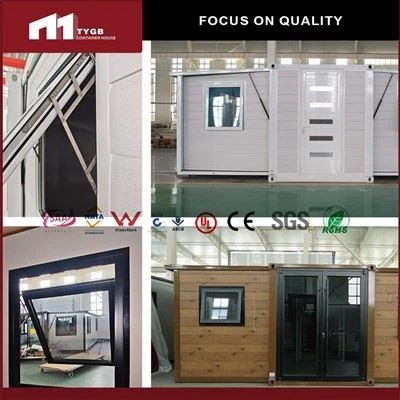
Final Thoughts: Turn Expandable Container Houses into a Business Opportunity
Expandable container houses offer more possibilities than simply providing additional living space.
They can support rental accommodation, glamping resorts, worker housing, construction site offices, cafés, retail stores, rural tourism, and modular housing distribution businesses.
For entrepreneurs and project developers, the key is to identify a real market demand and select a product configuration that matches the intended business model.
For distributors and builders, choosing a reliable manufacturer is equally important. Consistent product quality, customization capabilities, production capacity, transportation planning, and technical support can all influence the success of a long-term business.
If you are looking for a factory-direct expandable container house manufacturer in China, TYGB welcomes enquiries from international distributors, builders, contractors, and project developers.
Ready to explore your expandable container house business?
Contact TYGB to discuss product models, customized layouts, bulk orders, and potential distribution partnerships.
Hebei Tianyu Guangbo Module Housing Co., Ltd. (TYGB)
Website: https://www.hbtygbhouse.com/
Tell us about your business idea, target market, and estimated order quantity. Our team can help you explore suitable expandable housing solutions.
Send Inquiry