

How Much Does It Cost to Import an Expandable Container House from China to Australia?
Nov 06, 2026
Leave a message
How Much Does It Cost to Import an Expandable Container House from China to Australia?
Importing an expandable container house from China to Australia can be a cost-effective option for distributors, builders, property developers, holiday park operators, and accommodation project owners. However, the factory price is only one part of the total investment.
To calculate the real cost, Australian buyers need to consider international shipping, customs duty, Goods and Services Tax (GST), port charges, customs clearance, inland transportation, site preparation, and installation.
The final cost depends on the house model, order quantity, shipping method, destination port, product configuration, and local project requirements.
This guide explains the major cost components and shows you how to prepare a more accurate import budget before placing an order.
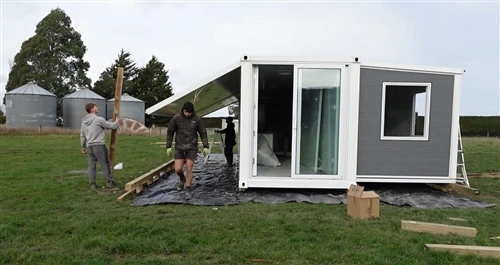
1. Start with the Factory Price in China
The first cost is the price quoted by the Chinese manufacturer.
Expandable container houses are available in different sizes, layouts, and configurations. A basic model and a fully equipped residential model can have significantly different prices.
The factory price is usually affected by the following factors:
House size and structure
20ft, 30ft, and 40ft models
Single-side or double-side expansion
Steel frame specifications
Structural design and load requirements
Folding and expansion mechanisms
Insulation and building materials
EPS, rock wool, or other insulation systems
Wall and roof panel thickness
Floor materials
Waterproofing and corrosion protection
Doors and window configurations
Interior configuration
Number of bedrooms
Kitchen cabinets and countertops
Bathroom equipment
Wet and dry bathroom separation
Electrical wiring and lighting
Air conditioning preparation and other optional equipment
Customization
Australian buyers may request different electrical configurations, window styles, floor plans, exterior finishes, and branding.
The more customized the product, the more important it is to confirm the final specifications before comparing quotations.
Tip for buyers: Ask the manufacturer to provide a detailed quotation based on one confirmed configuration. Comparing prices for different specifications can lead to misleading conclusions.
2. Understand the Shipping Cost from China to Australia
International transportation is one of the major costs when importing expandable container houses.
The shipping cost depends on:
The loading dimensions of each unit
The total cargo volume and weight
The number of units
The departure port in China
The destination port in Australia
Container availability and shipping schedules
Seasonal freight market conditions
Common Australian destination ports may include:
Sydney
Melbourne
Brisbane
Fremantle
Adelaide
The most suitable port depends on the buyer's final delivery location and the available shipping service.
Why folded dimensions matter
Expandable container houses are designed to reduce their transportation footprint when folded.
This can help buyers transport more usable space within a relatively compact shipping configuration. However, the actual loading quantity depends on the specific model's folded dimensions, weight, packaging, and container loading plan.
Before requesting a freight quotation, ask your supplier for:
Folded dimensions
Gross weight
Packaging dimensions
Loading plan
Number of units per shipping container
Loading and unloading requirements
Do not estimate shipping costs based only on the expanded floor area. Freight forwarders need the actual shipping dimensions and cargo details.
3. Calculate Australian Customs Duty and GST
Import taxes are an important part of the landed cost.
Australian importers should confirm the correct tariff classification and applicable duty rate before shipping. The duty rate is not necessarily the same for every type of modular or prefabricated building.
It may depend on the product's classification, origin, and applicable trade arrangements.
Australian GST on imported goods
For most taxable importations, Australia's GST rate is 10%.
According to the Australian Border Force, the value of a taxable importation generally includes:
The customs value of the imported goods
Customs duty payable
International transportation costs to the Australian place of consignment
Insurance for that international transportation
This means GST is not necessarily calculated on the factory price alone.
You can find the official explanation on the Australian Border Force website – GST and Other Taxes.
A simplified GST calculation
For illustration, assume:
Customs value: AUD 20,000
International freight and insurance: AUD 3,000
Customs duty: AUD 0
The simplified taxable importation value would be:
AUD 20,000 + AUD 3,000 = AUD 23,000
Estimated GST:
AUD 23,000 × 10% = AUD 2,300
This is an illustrative calculation, not a customs assessment. The actual customs value, exchange rate, duty, and other applicable adjustments must be confirmed for the specific shipment.
Can an Australian business claim GST back?
An eligible GST-registered business may be able to claim a credit for GST paid on imported goods, subject to Australian tax rules and record-keeping requirements.
Importers should consult their accountant or tax adviser to understand how GST applies to their business.
4. Include Customs Clearance and Port Charges
After the shipment arrives in Australia, additional charges may apply before the goods can be collected.
These can include:
Customs clearance fees
A licensed customs broker may charge for preparing and lodging import declarations, checking documents, and coordinating clearance.
Import processing charges
The Australian Border Force applies import processing charges to relevant declarations. The amount depends on the declaration type and consignment value.
Terminal and port charges
Depending on the shipping arrangement, these may include terminal handling, documentation, cargo release, and other local charges.
Inspection and storage costs
Additional costs may arise if cargo is selected for inspection or is not collected within the permitted free-time period.
Important: Ask your freight forwarder for a destination charge breakdown before confirming the shipment. A low ocean freight quotation does not always mean a low total shipping cost.
You can check the official Australian Border Force import processing charge information.
5. Calculate Inland Transportation in Australia
Once the cargo has cleared customs and been released, it needs to be transported from the port to the project site or warehouse.
This cost depends on:
Distance from the port
Cargo dimensions and weight
Truck type and transport permits, if required
Road access to the destination
Delivery time and unloading arrangements
Whether special lifting equipment is needed
For example, delivering a unit to a site near the port may be very different from transporting it to a regional or remote area.
Before ordering, provide the manufacturer or freight forwarder with the delivery postcode and site access information.
Also confirm whether the quotation includes unloading. Transportation and unloading are not necessarily included in the same service.
6. Consider Site Preparation and Installation Costs
The container house may arrive ready for expansion, but the site still needs to be prepared.
Project costs may include:
Site preparation
Land clearing
Ground leveling
Drainage
Access road preparation
Foundation
Concrete pads
Concrete slab
Concrete piers
Ground screws, where suitable
The correct foundation depends on soil conditions, structural loads, support-point locations, local regulations, and the manufacturer's installation requirements.
Lifting and installation
Crane or forklift rental
Qualified installation workers
Positioning and leveling
Expansion and securing
Connection of utilities
Utility connections
Electricity
Water supply
Wastewater and drainage
Internet or other services
Installation costs can vary considerably between projects. A small backyard accommodation project and a multi-unit holiday park development will have different site and labor requirements.
For overseas projects, ask the manufacturer whether installation drawings, operating instructions, and technical support are available.
7. Check Local Building and Approval Requirements Before Importing
One of the most important steps is confirming whether the intended building can be used for the proposed purpose at the destination site.
Importing a product through customs does not automatically mean it is approved for residential or commercial use.
Australian requirements may involve:
The National Construction Code (NCC)
State and territory building regulations
Local council planning requirements
Structural engineering documentation
Fire performance requirements
Energy efficiency requirements
Electrical and plumbing requirements
Site-specific approvals
The applicable requirements depend on the building classification, intended use, location, and project design.
For example, a temporary site office, a holiday park accommodation unit, and a permanent residential building may be subject to different approval pathways.
Discuss the project with the relevant local building surveyor, certifier, engineer, or approval professional before finalizing the product configuration.
This step can help prevent expensive modifications after the house arrives.


8. FOB, CIF, or DAP: Which Shipping Term Should Australian Buyers Choose?
The shipping term determines which party arranges transportation and where costs and risks are transferred.
FOB – Free on Board
Under FOB, the seller delivers the goods on board the nominated vessel at the agreed port of shipment.
The buyer generally arranges and pays for the main ocean freight, insurance if required, and destination-side costs.
FOB can be useful for experienced importers who have their own freight forwarders.
CIF – Cost, Insurance and Freight
Under CIF, the seller arranges and pays for ocean freight and the required minimum insurance to the named destination port.
However, the risk transfers to the buyer once the goods are loaded on board the vessel at the port of shipment.
CIF does not automatically include Australian customs clearance, import duty, GST, port charges, or delivery to the final site.
DAP – Delivered at Place
Under DAP, the seller arranges transportation to the agreed destination.
The buyer is generally responsible for import clearance, customs duties, taxes, and unloading.
DAP may be convenient for buyers who want the supplier to coordinate transportation, but the exact named destination and included services must be clearly stated.
For containerized cargo, FCA may also be worth discussing depending on the actual handover arrangement.
Our recommendation: Compare quotations using the same named destination, product specifications, and included services. Never compare FOB, CIF, and DAP prices as if they cover the same costs.
9. A Practical Checklist for Your Australian Import Budget
Before placing an order, prepare a cost sheet covering the following items.
Product costs
Factory price
Customization costs
Optional equipment
Packaging costs
International shipping
Inland transportation in China, if applicable
Export handling
Ocean freight
Cargo insurance
Australian import costs
Customs duty, if applicable
GST
Customs broker fees
Import processing charges
Port and terminal charges
Inspection or storage charges, if applicable
Delivery and installation
Inland transportation
Crane or forklift
Foundation
Installation labor
Utility connections
Local approval and engineering costs
Contingency
Exchange rate changes
Freight fluctuations
Unexpected site work
Additional handling or storage
A complete budget should distinguish between the cost of importing the product and the cost of completing the entire building project.
10. How Can Australian Buyers Reduce Import Costs?
Reducing the total project cost does not necessarily mean choosing the cheapest factory quotation.
Here are several practical ways to improve purchasing efficiency.
1. Confirm the floor plan before requesting a quotation
Choose the number of bedrooms, bathroom configuration, kitchen layout, and essential equipment in advance.
This reduces repeated revisions and makes supplier quotations easier to compare.
2. Compare folded dimensions and loading plans
Ask manufacturers to provide actual loading dimensions and a proposed container loading plan.
A more efficient loading arrangement may help reduce transportation costs per unit.
3. Consider ordering multiple units
For distributors, developers, and accommodation operators, ordering multiple units may improve production planning and shipping efficiency.
However, the savings depend on the model, loading arrangement, and freight quotation.
4. Avoid unnecessary customization
Standard configurations can simplify production and reduce the number of special components.
Customize the features that matter to your customers, rather than adding options that do not improve the project's value.
5. Confirm Australian requirements early
Checking local approval, electrical, plumbing, structural, and fire requirements before production can help avoid expensive changes after delivery.
6. Work with a manufacturer that provides clear documentation
A reliable manufacturer should be able to provide detailed product specifications, packing information, installation instructions, and relevant technical documents for review.
Good documentation helps buyers coordinate with freight forwarders, customs brokers, and local project professionals.
11. Why Choose a Direct Expandable Container House Manufacturer in China?
For Australian distributors and project buyers, working directly with a manufacturer can make communication and customization more efficient.
TYGB (Hebei Tianyu Guangbo Module Housing Co., Ltd.) manufactures expandable container houses and modular housing products for overseas markets.
Our product range includes:
20ft, 30ft, and 40ft expandable container houses
Single-side and double-side expandable models
Sliding-out container houses
Customized modular accommodation units
Other prefabricated housing solutions
We can discuss product configurations, folded dimensions, loading details, and customization requirements based on your project.
For Australian buyers, we recommend confirming the intended use, local approval requirements, electrical configuration, and delivery location before finalizing the quotation.
Whether you are a distributor looking for a long-term manufacturing partner or a developer planning a multi-unit accommodation project, providing your project details helps us prepare a more relevant proposal.
12. Frequently Asked Questions
Q1: How much does it cost to import an expandable container house from China to Australia?
There is no single fixed import cost. The total depends on the factory price, model, shipping dimensions, freight, customs duty, GST, port charges, inland transportation, and installation.
Request a quotation based on your exact model and Australian delivery location.
Q2: Is GST charged on expandable container houses imported into Australia?
Most taxable importations are subject to 10% GST. The taxable importation value generally includes the customs value, applicable customs duty, and international transport and insurance costs.
The actual amount should be confirmed with a licensed customs broker.
Q3: Does a CIF quotation include all Australian import costs?
No. CIF generally includes the cost of goods, ocean freight, and the required minimum insurance to the named destination port. Australian customs clearance, import duty, GST, destination charges, and final delivery are generally additional.
Q4: Can I use an expandable container house as a permanent home in Australia?
Potentially, depending on the product design, site, intended use, and applicable state, territory, and local approval requirements. Import clearance alone does not establish building approval.
Check with the relevant local building professional before ordering.
Q5: What information should I provide to get an accurate quotation?
Prepare the following information:
Required house size and model
Number of bedrooms and bathrooms
Preferred interior configuration
Required electrical and plumbing specifications
Estimated order quantity
Destination port or delivery postcode
Intended application
Any known local approval or certification requirements
The more detailed your information, the more accurately a manufacturer and freight forwarder can estimate the project cost.


Conclusion: Calculate the Full Landed Cost Before You Order
Importing an expandable container house from China to Australia involves more than comparing factory prices.
Australian buyers should calculate the complete cost from production and international shipping to customs clearance, GST, inland delivery, site preparation, and installation.
The best purchasing decision is based on the complete project budget, product specifications, local approval requirements, and supplier reliability.
If you are planning to import expandable container houses from China, TYGB can help you review model options, discuss customization, and prepare product and shipping information for your project.
Contact TYGB to discuss your Australian expandable container house project.
Send us your preferred model, quantity, and destination location to start a quotation.
Send Inquiry